

Five games into the season, one of the Washington Wizards’ biggest weaknesses is becoming increasingly difficult to dismiss.
They can’t consistently finish defensive possessions with rebounds.
Washington was dominated on the glass again in Wednesday’s loss to the Cleveland Cavaliers, getting outrebounded 47-27 while surrendering 15 offensive rebounds and 19 second-chance points.
It came just one game after the Charlotte Hornets grabbed 20 offensive rebounds against Washington.
At this point, the problem is becoming a trend.
Locked On Wizards host Ben Strober didn’t mince words after the latest loss.
“There isn’t any reason that the shortest guy on the court has five rebounds more than your seven-footers. It’s about positioning. It’s an IQ thing, but also putting a body on somebody and going after the basketball and getting it. And there have been too many lapses through the first five games where they just have not done that. The rebounding has been the reason they’ve lost these last two games. There’s really no other reason you could pinpoint other than getting dominated the way they were on the glass tonight. You just can’t lose the rebounding battle by a 20-point margin. 47 to 27 tonight. Cleveland outrebounds Washington. It’s unacceptable. You’re never going to win basketball games by doing that.”
The numbers from Washington’s frontcourt make the problem even more glaring.
Anthony Davis finished with five rebounds. Alex Sarr had four. Deandre Ayton added three.
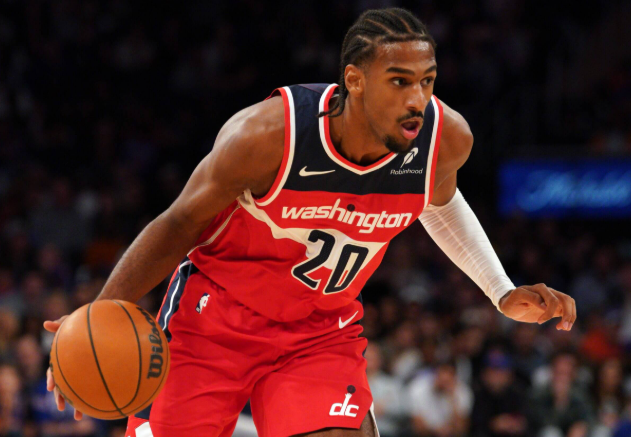
That’s 12 combined rebounds from three of the biggest players on Washington’s roster.
Trae Young, at 6-foot-1, grabbed five himself.
Perhaps the most concerning part is that this wasn’t expected to be a major weakness entering the season. Washington has considerable size in Davis, Sarr and Ayton, yet that size hasn’t consistently translated into controlling the glass.
Justin Champagnie’s absence isn’t helping.
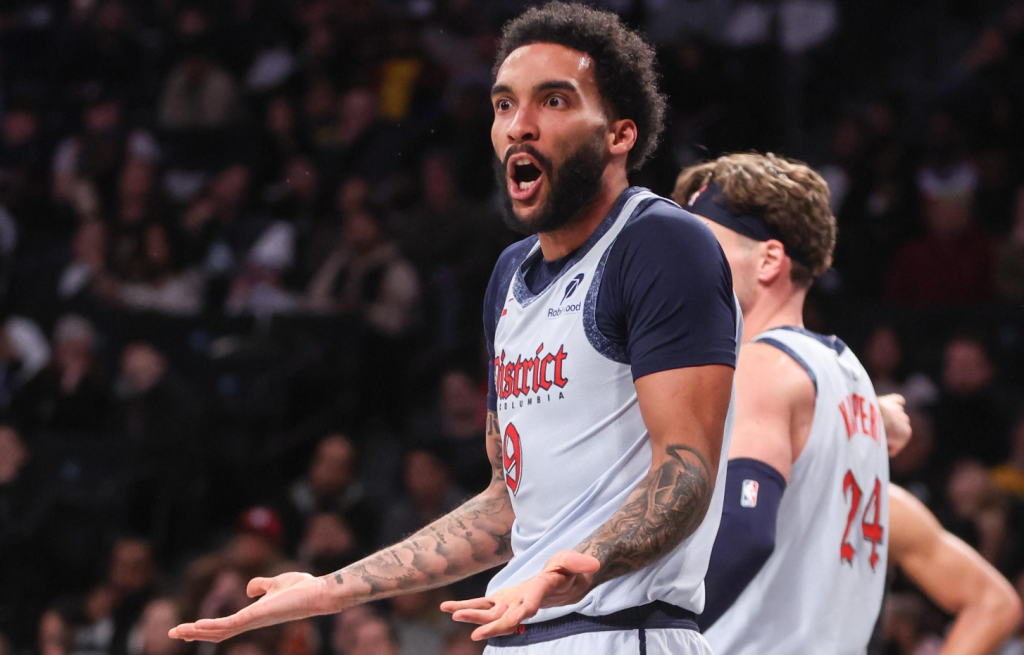
Champagnie emerged as Washington’s best rebounder early in the season before suffering a foot injury against Charlotte. His activity and willingness to do the dirty work helped cover for some of the Wizards’ shortcomings on the glass.
But Washington can’t depend on a 6-foot-6 wing to solve its rebounding problems.
“If you’re going to rely on Champagnie, a 6-foot-6 player, to get you over 10 rebounds per night… that’s not a sustainable thing,” Strober said. “You have to have your bigs and all of your other players contribute on the glass to get that stuff done.”
The timing makes the problem even more pressing.
Washington’s next game comes against the same Charlotte team that just punished the Wizards on the offensive glass.
That gives Washington an immediate opportunity to show it can adjust.
Five games is still a small sample, and there have been plenty of encouraging signs from a Wizards team still learning how to play together.
Rebounding, however, isn’t something Washington can simply wait for chemistry to fix.
The Wizards have the size.
Now they need to start using it.
Leave a Reply